2026 Jeep® Grand Cherokee in Margate, FL
The 2026 Jeep® Grand Cherokee is a four-door sport-utility vehicle engineered with a front-engine layout and available rear-wheel or four-wheel drive configurations. It is built on a steel uniframe structure designed to combine rigidity with controlled weight distribution. The vehicle is assembled at the Detroit Assembly Complex in Michigan and classified as a multipurpose vehicle. Its construction supports a balance of structural strength, drivetrain efficiency, and adaptability across different driving conditions. The design prioritizes mechanical precision, system integration, and consistent performance across all configurations.

Powertrain Architecture and Engine Output
The 2026 Jeep® Grand Cherokee offers two internal combustion engine configurations, each designed with distinct mechanical characteristics and performance outputs. The standard 3.6-liter Pentastar® V6 engine features a 60-degree V-type configuration with liquid cooling and a displacement of 3,604 cubic centimeters. It utilizes a chain-driven dual overhead camshaft system with 24 valves and hydraulic end-pivot roller rockers. Fuel delivery is managed through a sequential multiport electronic injection system. The engine is constructed with an aluminum deep-skirt block and aluminum alloy cylinder heads, contributing to weight reduction and thermal efficiency.
This V6 engine produces 293 horsepower at 6,400 revolutions per minute and 260 pound-feet of torque at 4,000 revolutions per minute. The compression ratio is set at 11.3 to 1, and the maximum engine speed is electronically limited to 6,700 revolutions per minute. It operates on regular unleaded fuel with an oil capacity of 5.0 quarts and a coolant capacity of 14.0 quarts.
An available 2.0-liter Hurricane turbocharged inline four-cylinder engine introduces a different approach to performance delivery. This engine has a displacement of 1,995 cubic centimeters and integrates both direct and port fuel injection systems. Its construction includes a deep-skirt cast-aluminum block, cross-bolted steel main bearing caps, and low-friction plasma spray-bore coated cylinders. Additional internal components include a forged steel crankshaft, forged steel connecting rods, and cast aluminum alloy pistons.
The turbocharged engine generates 324 horsepower at 6,000 revolutions per minute and 332 pound-feet of torque between 3,000 and 4,500 revolutions per minute. It operates with a compression ratio of 12 to 1 and has a maximum engine speed of 6,500 revolutions per minute. The cooling system includes separate capacities for the engine and intercooler, ensuring controlled thermal management during operation.
Transmission Systems and Gear Ratios
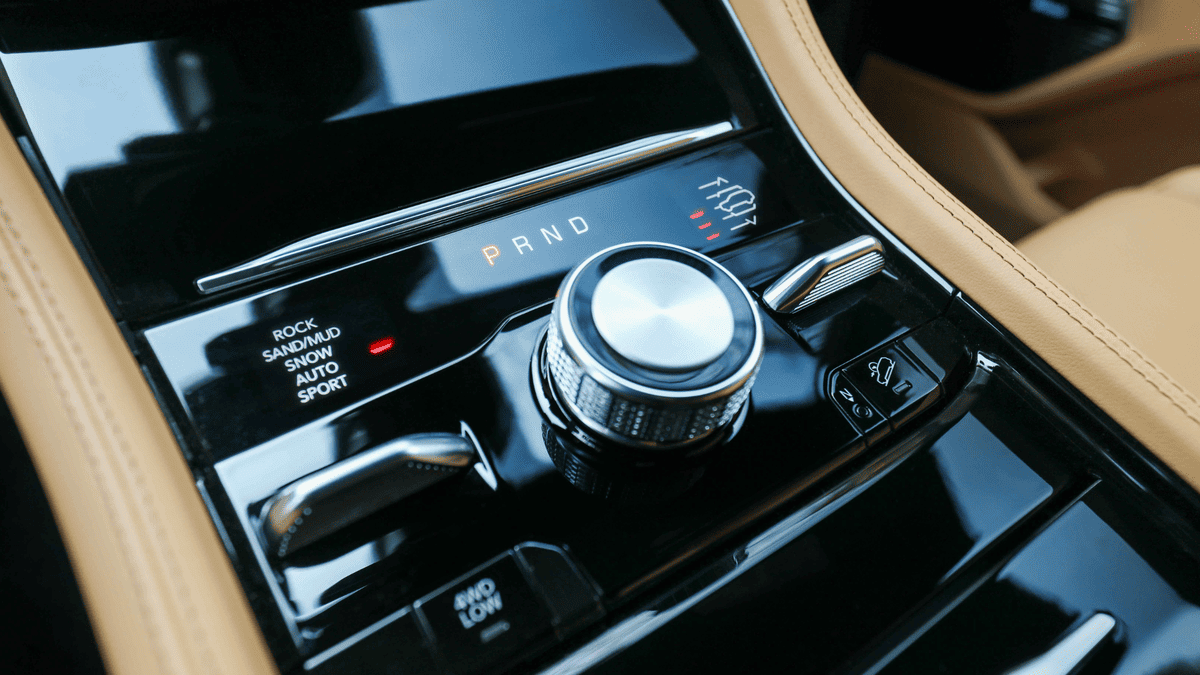
Both engine options are paired with eight-speed automatic transmissions designed for controlled gear transitions and efficient torque distribution. The TorqueFlite 8HP70 transmission includes electronically modulated torque converter clutch operation and driver-interactive manual control. Its gear ratios range from 4.71 in first gear to 0.67 in eighth gear, with a reverse ratio of 3.30.
The TorqueFlite 880RE and 8HP80 transmissions are also available, particularly with the turbocharged engine configuration. These systems provide a wider first gear ratio of 5.50, contributing to improved initial acceleration and towing performance. The eighth gear ratio of 0.64 supports fuel efficiency during highway driving. Reverse gear is set at 4.54, allowing controlled maneuverability in low-speed conditions.
Drivetrain Configurations and Transfer Case Functionality
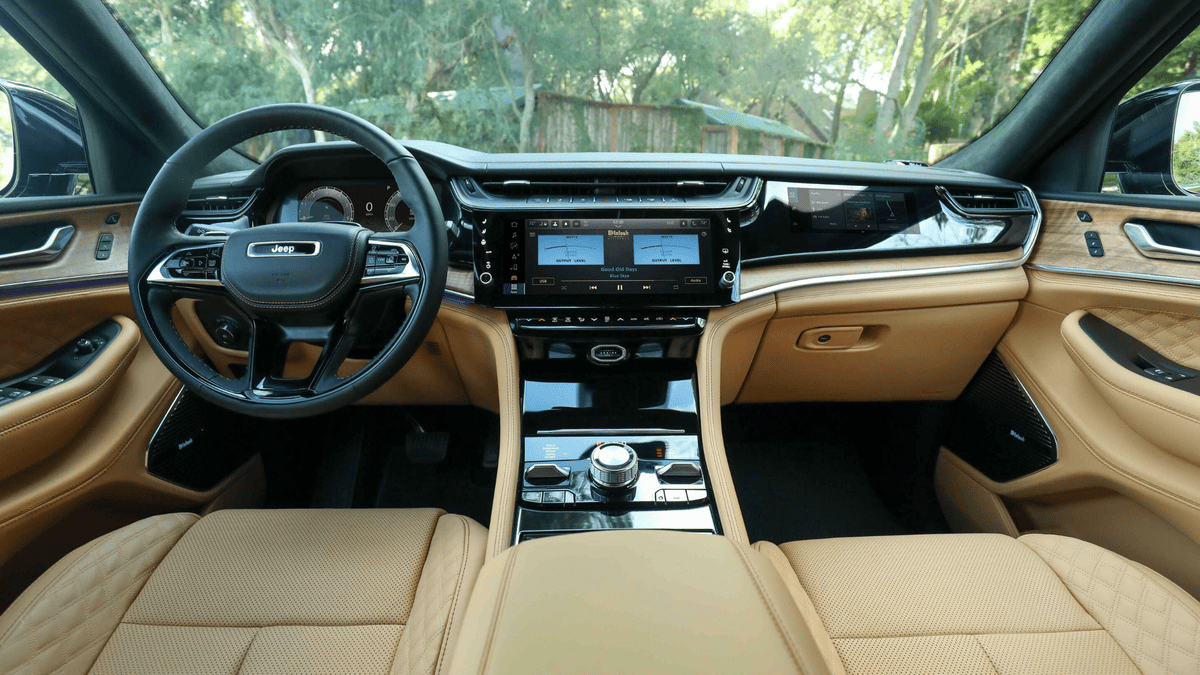
The drivetrain system offers flexibility through rear-wheel drive and multiple four-wheel drive configurations. Two electronically controlled transfer cases are available. The MP3015C transfer case operates as a single-speed system with full-time active four-wheel drive capability. It distributes torque variably between the front and rear axles, depending on traction requirements.
The MP3028C transfer case provides a two-speed configuration with additional operating modes, including four-wheel drive low with a locking function and a neutral setting. It features a low-range ratio of 2.72, enabling increased torque multiplication for off-road conditions. Both systems are designed to maintain consistent traction across varying surfaces without requiring manual intervention.
Front and rear axles utilize a 3.45 to 1 ratio, contributing to balanced acceleration and towing capacity. The front differential includes an axle disconnect system, while the rear differential can be equipped with an electronic limited-slip function for enhanced traction control.
Suspension Geometry and Ride Control
The suspension system is engineered with a multi-link independent configuration at both the front and rear. The front suspension incorporates coil springs and gas-charged twin-tube coilover shock absorbers, along with aluminum control arms and knuckles. The rear suspension mirrors this design with coil springs and twin-tube shocks, including load-leveling functionality to support towing operations.
An available air suspension system provides adjustable ride height settings. Standard ground clearance measures 8.4 inches, while the air suspension can increase this measurement to 10.9 inches in raised positions. The system also lowers the vehicle for easier entry and exit, reducing the load floor height to 30.4 inches in its lowest setting.
Approach, breakover, and departure angles vary depending on suspension configuration. With air suspension, the approach angle can reach up to 30.1 degrees, while the breakover angle increases to 24 degrees. These adjustments enhance the vehicle’s ability to navigate uneven terrain.
Steering System and Handling Metrics
The steering system uses an electric rack-and-pinion design that provides consistent response and reduced steering effort. The steering ratio is 16.9 to 1 for rear-wheel drive models and 15.6 to 1 for four-wheel drive configurations. The turning diameter is measured at 38 feet, allowing controlled maneuverability in confined spaces.
Steering input is supported by electronic assistance that adjusts based on vehicle speed, improving stability at higher speeds and precision during low-speed maneuvers.
Braking System Design and Stability Integration
The braking system includes four-wheel vented disc brakes with an electric boost function. Front rotors measure 13.94 inches in diameter, while rear rotors measure 13.78 inches. The front braking system uses two-piston pin-slider calipers, and the rear system uses single-piston calipers with an electronic parking brake.
Integrated stability systems include electronic stability control, all-speed traction control, brake assist, and a four-wheel anti-lock braking system. These systems are designed to maintain vehicle control under varying traction conditions by adjusting braking force and engine output as needed.
Dimensional Specifications and Spatial Configuration
The 2026 Jeep® Grand Cherokee is designed with a wheelbase of 116.7 inches and an overall length of 193.5 inches. The vehicle width measures 77.5 inches with mirrors folded and 84.6 inches with mirrors extended. The overall height ranges from 70.8 inches with standard suspension to 70.9 inches with air suspension.
Interior passenger volume is measured at 144.6 cubic feet, providing space for five occupants. Front-row headroom is 39.9 inches, and legroom is 41.3 inches. Rear passengers receive 39.4 inches of headroom and 38.2 inches of legroom. Cargo capacity is 37.7 cubic feet behind the second row and expands to 70.8 cubic feet when the rear seats are folded.
Fuel tank capacity is 23 gallons, supporting extended driving intervals between refueling stops.
Wheels, Tires, and Contact Patch Engineering
Wheel configurations vary by trim level, starting with 17-inch painted cast aluminum wheels and extending to available 21-inch machined aluminum wheels. Tire sizes range from 245/70R17 to 275/45R21, depending on configuration. Tire models include all-season options designed for consistent traction and durability across different surfaces.
These combinations influence ride comfort, handling characteristics, and grip, contributing to stable vehicle dynamics under varying conditions.
Electrical System and Power Distribution
The electrical system includes alternator options ranging from 160 to 240 amps, depending on model configuration. Battery systems are maintenance-free and include auxiliary support for engine stop-start functionality. This configuration ensures reliable power delivery for vehicle systems, including drivetrain controls and onboard electronics.
Towing Capability and Load Management
The 2026 Jeep® Grand Cherokee supports a maximum trailer weight of 6,200 pounds when properly equipped. This capability is supported by the engine output, transmission gearing, and axle ratio. Load-leveling rear suspension components assist in maintaining vehicle stability under towing conditions by adjusting ride height and distributing weight evenly.
Payload capacity varies by configuration, with values ranging from approximately 1,160 to 1,280 pounds. Weight distribution remains balanced across both two-wheel and four-wheel drive models, supporting predictable handling characteristics.
Schedule a Test Ride Today
Drivers interested in examining the technical capabilities of the 2026 Jeep® Grand Cherokee can visit Arrigo Chrysler Dodge Jeep® Ram in Margate, FL to review available configurations. The vehicle’s engine output, transmission systems, and drivetrain options can be assessed through direct operation. A test drive allows evaluation of steering response, braking performance, and suspension behavior under controlled conditions. The towing capability and ride height adjustments can also be observed during operation. Scheduling a test drive provides an opportunity to analyze how these specifications function together in a single platform.